Browner: Redder than Obama Knows

By Steve Milloy
January 15, 2009, FoxNews.com

Incoming White House energy-environment czar Carol Browner was recently discovered to be a commissioner in Socialist International. While that revelation has been ignored by the mainstream media and blithely dismissed by her supporters, you may soon be paying the cost of Browner’s political beliefs in your electricity bill.

Socialist International is precisely what it sounds like — a decidedly anti-capitalistic political cause. Founded in 1951, its organizing document rails against capitalism, asserting that it “has been incapable of satisfying the elementary needs of the world’s population … unable to function without devastating crises and mass unemployment … produced social insecurity and glaring contrasts between rich and poor … [and] resorted to imperialist expansion and colonial exploitation.…” Socialist International also asserts, “In some countries, powerful capitalist groups helped the barbarism of the past to raise its head again in the form of Fascism and Nazism.” So Socialist International at least partly blames Adolph Hitler on capitalism.

According to its own principles, Socialist International favors the nationalization of industry, is skeptical of the benefits of economic growth and wants to establish a more “equitable international economic order.” In true Marxist form, it asserts that, “The concentration of economic power in few private hands must be replaced by a different order in which each person is entitled — as citizen, consumer or wage-earner — to influence the direction and distribution of production, the shaping of the means of production, and the conditions of working life.”

There’s much more in Socialist International’s principles, but you get the idea.

So what does all this have to do with your electricity bill? In late-December, Carbon Control News reported that Browner was a “strong backer” of utility “decoupling,” which had emerged as a “key climate policy priority for Obama.”

What is utility decoupling? The profits of electric utility companies have traditionally depended on the amount of electricity sold; basically, the more power that is sold, the more profit that is earned. The productivity-profitability link is a logical and standard business principle that is easy to understand, easy to implement and that has worked for, well, millennia in myriad business ventures — but no more for electric utilities, if Browner has her way.

Browner wants to sever, or decouple, a utility’s profits from the amount of electricity it sells. More electricity means more coal and natural gas burning, which, according to green dogma, means more greenhouse gas emissions and global warming. So Browner believes that less electricity production is, at least, a partial answer to climate change. But less electricity would mean less profitability for electric utilities, a powerful Washington lobby that Browner can ill afford to antagonize.

To date, the electric utility industry has aided and abetted the climate alarmist cause, if not by actually lobbying for global warming regulation, then at least by its willingness to entertain such regulation as public policy worthy of serious consideration. But since endangering utility profits would likely galvanize the industry once and for all against emissions regulation, the green dilemma boils down to figuring out a way to reduce electricity sales while guaranteeing utility profits. Enter decoupling.

How would decoupling actually function in practice? There are several different schemes for decoupling, but their tedious complexity precludes elaboration here. But the schemes all essentially amount to the same thing — sticking it to ratepayers and taxpayers. This should come as no surprise, when you stop to think about it.

Decoupling involves government guaranteeing electric utilities steady or steadily increasing profits for selling less electricity. That means implementing one of three basic scenarios: (1) consumers paying more for less electricity; (2) electricity prices remaining steady and taxpayers being called upon to subsidize the difference between the profits from actual electricity sales and the profits guaranteed by government; or (3) some combination of the two. There are no other possibilities.

Decoupling advocates assert that the consumers can avoid higher electric bills through “voluntary conservation measures” — that is, you can lower your bill by using less power. It’s a specious assertion since consumers will still pay higher rates for the electricity they use. Moreover, “voluntary conservation” is not necessarily without cost. Compact fluorescent lightbulbs, insulation, weather stripping, solar panels and other electricity conservation efforts all can entail significant added costs that can take many years to pay for themselves.

Getting back to Browner, what could be more anti-capitalistic than to disassociate profits from sales? It’s often difficult enough to determine profits when they are tied to sales — ask any author or recording artist. Imagine the difficulty, arbitrariness and potential for gamesmanship, if not just plain fraud, involved with government-dictated profitability based on reducing productivity. In the case of electric utilities, already a most heavily regulated enterprise, even greater government regulation of the industry will be required, which, of course, is what a good socialist like Browner would want.

Perhaps what’s most troublesome about all this is the stealthiness. Less than a week after Browner was outed as a Socialist International muckety-muck, the group scrubbed its web site of her photo and evidence of her commission membership. And in the larger picture, it’s intellectually dishonest for advocates of socializing electric utilities to promote the euphemistic “decoupling” as if it were some novel solution rather than what it really is — a subversion of our capitalistic system.

You know, one might get the impression that there’s actually something wrong with, and embarrassing about, a key White House adviser advocating the undermining of a basic principle of our economic system.

Steven Milloy publishes JunkScience.com and manages the Free Enterprise Action Fund. He is a junk science expert, and an adjunct scholar at the Competitive Enterprise Institute.
Time for a Surgeon General-ectomy?

By Steven Milloy
January 08, 2009, FoxNews.com

President-elect Obama has reportedly chosen Sanjay Gupta, CNN’s chief medical correspondent and one of People magazine’s “sexiest men alive,” for the post of surgeon general. Those aren’t the only reasons that the surgeon general’s position ought to be abolished.

The original version of the surgeon general position was created in 1870 to administer what was then known as the Marine Hospital System (MHS), which cared for sick and injured merchant seaman. The MHS, including a uniformed “Commission Corps” of physicians, was converted in 1902 into the Public Health and Marine Hospital Service, and its mission was expanded to medical inspection and quarantine of arriving immigrants, such as those landing at Ellis Island in New York.

In 1912, the Service was renamed the U.S. Public Health Service (PHS) as its mission was further expanded to conduct investigations into infectious diseases (such as tuberculosis, hookworm, malaria, and leprosy), sanitation, water supplies, and sewage disposal. Between 1930 and 1944, the Commission Corps officers were expanded to include engineers, dentists, research scientists, nurses, and other health care specialists.

But in 1968, the surgeon general position fell victim to President Lyndon Johnson’s reorganization of the then-Department of Health Education and Welfare (HEW, or what is known today as the Department of Health and Human Services). The Office of Surgeon General that administered the PHS was scrapped, and responsibility for the PHS was assigned to the assistant secretary for health, who reported directly to the secretary of HEW. A position of “surgeon general” was then created to merely “advise” the assistant secretary on professional medical matters.

After almost two decades of more bureaucratic reshuffling — during which time the surgeon general was made a direct adviser of the secretary of HEW followed by the combining of the positions of surgeon general and assistant secretary for health in 1977 and their separation again in 1981 — the Office of the Surgeon General was re-established in 1987 with largely nominal responsibility for managing the PHS Commissioned Corps personnel.

The surgeon general doesn’t actually command all of the Commission Corps officers. Most of them work in other federal agencies — like the EPA, Coast Guard and Bureau of Prisons — and report directly to the various line managers in those agencies who may or may not be in the PHS.

Although C. Everett Koop attempted to revitalize the Corps in the late 1980s, the superfluous nature of the surgeon general position became glaringly obvious during the tenure of Jocelyn Elders, President Bill Clinton’s first surgeon general. Besides taking controversial positions on drug legalization and the distribution of contraceptives in schools, in early December 1994, Elders spoke in support of the teaching of masturbation. She was promptly fired by Clinton. The position of surgeon general remained vacant for three years, until Clinton nominated David Satcher.

At the time of Satcher’s nomination, the Cato Institute’s Dr. Michael Gough and I observed in a Wall Street Journal column, “We have not had a surgeon general for three years. Has anyone noticed? Is anyone’s health at risk?”

The answer, of course, was that no one’s health was at risk and, in fact, the U.S. public health had never been better. Life expectancy was at an all-time high. Death rates from cancer, heart disease and AIDS were falling. This trend continues today, no thanks to whatever it is that the surgeon general does. And, by the way, what exactly has the current surgeon general been doing?

Judging by 23 of the 32 press releases issued from his office during 2008, Acting Surgeon General Steven Galson has spent a great deal of time traveling coast-to-coast promoting the “Healthy Youth for a Healthy Future” project, which “focuses on recognizing and showcasing those communities throughout the nation that are addressing childhood overweight and obesity prevention by helping kids stay active, encouraging healthy eating habits, and promoting healthy choices.”

So let’s look at a few examples of Surgeon General Galson in action:

In Harrisonburg, Pa., Galson presented, “… the Healthy Youth for a Healthy Future Champion Award to the Girls Golf Program, a partnership between the Ladies Professional Golf Association, the United States Golf Association, James Madison University, and Mulligan’s Golf Center.” The media release continued: “This program is helping local girls and women stay physically active, gain self-confidence, and develop lasting friendships, while fostering an enjoyment for the game of golf.”

At Disney World, Galson honored the Walt Disney Company for removing trans fats from the foods on its menu and for making sure that the use of the Disney name and its characters is limited to kid-focused products that meet specific guidelines that limit calories, fat, saturated fat and sugar.”

In New Mexico, Galson honored a wellness center that “will help students stay fit and healthy using new tools such as exer-gaming and interactive stationary bicycles.”

So over the last 96 years, the Surgeon General has gone from working on genuine public health problems (infectious disease, clean water and sanitation) to advocating golf, Mickey Mouse-less food and beverage containers and video exercise games as public health measures.

It may very well be that Gupta’s celebrity — apparently his unique qualification to hold office — makes him the ideal nominee to continue the Office of Surgeon General’s downward trajectory into obscurity and oblivion. On the other hand, if Gupta were really serious about advising Americans on health matters, he would stay at CNN where he could reach more people on any given day than he could by traveling the country handing out dubious prizes that amount to little more than corporate public relations.

Steven Milloy publishes JunkScience.com and manages the Free Enterprise Action Fund. He is a junk science expert, and an adjunct scholar at the Competitive Enterprise Institute.

Let There Be Dark?

By Steven Milloy
December 31, 2008, FoxNews.com

Some astronomers seem to be willing to say and do just about anything just to get a better look at the heavens, including making city streets safer for criminals.

In a commentary in Nature magazine (Jan. 1) presaging the 2009 International Year of Astronomy, astronomer Malcolm Smith says that it’s time for cities to “turn off the lights” wo we can better see the Milky Way, conserve energy, protect wildlife and benefit human health. Smith is part of the so-called Dark Skies Awareness project, an international coalition of astronomers and related institutions that wants to “find allies in a common cause to convince authorities and the public that a dark sky is a valuable resource for everyone.”

“A fifth of the world’s population cannot see the Milky Way,” is Smith’s headline argument. “This has a subtle cultural impact. Without a direct view of the stars, mankind is cut off from most of the Universe, deprived of any direct sense of its huge scale and our tiny place within it,” he asserts.

That fuzzy mix of cosmology, sociology and psychology would seem to be an odd argument coming from someone who holds himself out to be a scientist. Odder still is Smith’s subsequent statement that, “Our relationship with artificial light is complicated and changing. Humans innately fear the darkness and modern society relies on light as a security measure, even though there is no evidence that controlling light wastage increases crime levels.”

Moving past the term “controlling light wastage,” which seems to be little more than a euphemism for darker city streets, plenty of data link dim urban areas with higher crime rates. A 2004 study in the Journal of British Criminology, for example, studied 13 U.S. and British cities and concluded that improved street lighting, on average, was associated with a 20 percent decrease in crime. In contrast, I could find no data linking the inability to see the Milky Way with any sort of harm to anyone.

Smith next asserts that skyscraper lighting kills millions of migratory birds in North America. An “unnecessary annual slaughter,” he calls it. But his source for that factoid, the Fatal Light Awareness Program, doesn’t even place building lighting in its “Top 13” risks to birds. Glass windows are first (purportedly killing more than 900 million birds per year), followed by power lines (174 million), hunting (more than 100 million), house cats (100 million), cars and trucks (100 million), pesticides and cutting hay (67 million), communications towers (4 to 10 million), oil and gas drilling (1 to 2 million), land development (unknown), livestock water tanks (unknown), logging and mining (unknown), commercial fishing (unknown) and power line electrocution (more than 1,000).

It seems that if Smith were genuinely concerned about birds he would also be promoting windowless buildings, catless homes, hayless farms and other similar “awareness” projects. But there’s more to Smith’s argument for making urban areas more dangerous in the name of enabling urbanite contemplation of the Milky Way.

Smith suggests that city lights increase cancer risk by reducing the normal production of the hormone melatonin, “a suppressant of cell division in cancer tissues,” he asserts. But alleging a link between melatonin levels and cancer risk is speculation, not fact. To support this conjecture, Smith cites a 2007 article in the Journal of Pineal Research that vaguely concluded, “The increasing prevalence of exposure to light at night has significant social, ecological, behavioral and health consequences that are only now becoming apparent.”

Putting millennia of nighttime candle and torch illumination aside, we’ve been lighting street and indoor lights with gas since 1807 and with electricity since the 1880s. If night lighting was a genuine and significant problem, you’d think someone would have noticed by now. Moreover, improved and increased night lighting in developed countries over the last 200 years has coincided with more than a doubling of life expectancy, the most objective indicator of public health. As you can readily see from this map image of nighttime lighting around the planet, it’s the darkest populated areas that tend to be the least healthy and poorest.

Although Smith only briefly mentions energy conservation and energy-efficient lighting in his article, a visit to the Dark Skies Awareness project Web page reveals that the project is partnering with the World Wildlife Fund to promote global warming alarmism. The precise point of intersection for the two groups’ agendas is the upcoming “Earth Hour” on March 29, when they hope “tens of millions of people around the world will come together once again to make a bold statement about their concern about climate change by… turning off their lights for one hour.”

Dark Skies states that, “Earth Hour symbolizes that by working together, each of us can make a positive impact in the fight against climate change. Here in the US, it sends a message that Americans care about this issue and stand with the rest of the world in seeking to find solutions to the escalating climate crisis.”

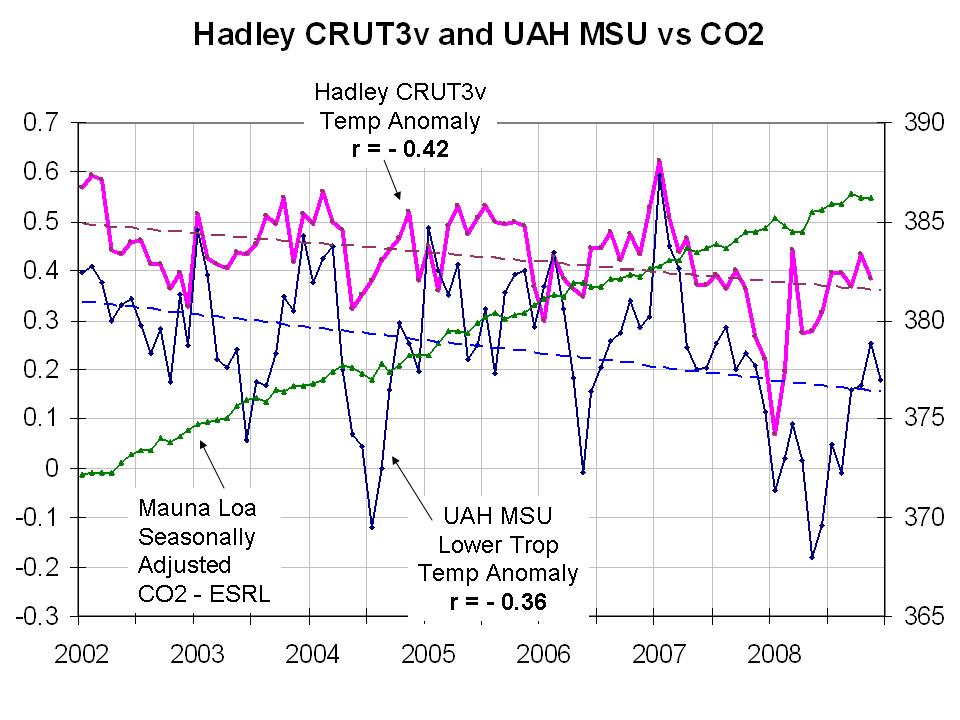
The term “escalating climate crisis,” however, can only justifiably be referring to global warming alarmism rather than manmade temperature increases. Average global temperature, after all, has trended downward over the last five years despite the ever-increasing output of manmade greenhouse gases.

If Smith’s article is what passes for scientific thinking among the Dark Skies crowd, perhaps they ought to consider renaming the group the Dark Ages Advocacy project.

Steven Milloy publishes JunkScience.com and manages the Free Enterprise Action Fund. He is a junk science expert, and an adjunct scholar at the Competitive Enterprise Institute.

Asbestos Fireproofing Might Have Prevented World Trade Center Collapse

By Steven Milloy
January 18, 2007, FoxNews.com

In the aftermath of the Sept. 11 terrorist attacks, I suggested in this column on Sept. 14, 2001 that many lives could have been saved if asbestos fireproofing been used in the World Trade Center. Continue reading Asbestos Fireproofing Might Have Prevented World Trade Center Collapse

Stumping for Stem Cells

By Steven Milloy
October 18, 2004, FoxNews.com

The most recent poll on California’s Proposition 71 (search) concerning state funding of embryonic stem cell research indicates that 46 percent of likely voters support the measure, 39 percent oppose it and 15 percent are undecided. Continue reading Stumping for Stem Cells

Dirt-Asthma Link Needs Scrubbing

By Steven Milloy
September 20, 2002, FoxNews.com

Cleanliness may be causing children to become asthmatic, researchers suggested this week. Continue reading Dirt-Asthma Link Needs Scrubbing

It Might Not Have Been a Clone

By Steven Milloy
November 30, 2001, FoxNews.com

News of a cloned human embryo re-ignited a smoldering debate. That wasn’t the researchers’ intention. They wanted to focus on the prospects of medical therapies involving stem cells derived from cloned human embryos. Continue reading It Might Not Have Been a Clone

The CDC's Public Health Turkeys

by Steven Milloy
November 21, 2001, FoxNews.com

The Centers for Disease Control and Prevention performed admirably in managing the recent anthrax attacks. But that performance is a lone highlight for an agency in desperate need of something useful to do.

The CDC’s public health crisis of the moment is traveling by car during the Thanksgiving holiday. The CDC issued an advisory reminding motorists to wear seat belts, restrain children appropriately and to not drink and drive.

While this is sensible advice, the CDC offers it because “in 2000 during the Thanksgiving holiday, motor-vehicle crashes killed approximately 500 persons and resulted in more than 43,000 hospital emergency department visits.” CDC portrays Thanksgiving as a particularly risky time for motorists.

In fact, though, the Thanksgiving holiday is no more dangerous to motorists than any other five-day period.

About 40,000 persons are killed and 3.2 million are injured in automobile accidents every year. This averages out to about 110 killed and about 8,800 injured every day. So for any five-day period, we might expect 550 deaths and 44,000 injuries resulting from automobile accidents. There doesn’t seem to be extra motorist carnage during the Thanksgiving holiday.

The CDC pulls a similar stunt every Halloween, alarming parents about increased child pedestrian deaths. During 1975 to 1996, from 4 p.m. through 10 p.m. on October 31, a total of 89 deaths occurred among pedestrians aged 5 to 14 years, compared with 8,846 on all other evenings.

This works out to about 4 deaths each Halloween, compared to 1 death on all other evenings. It apparently never occurred to the CDC that there is a many-fold increase in child pedestrians on Halloween night.

If the CDC more appropriately compared death rates, instead of just numbers of deaths, it most likely would have found the child pedestrian death rate actually decreases on Halloween. But what kind of scare would that make?

Holidays aren’t our only public health “problem,” according to CDC researchers. Suburban living is another.

Early November saw the release of “Creating a Healthy Environment: The Impact of the Built Environment on Public Health” — a report authored by two senior CDC researchers.

The reasons why suburban living is a public health problem, according to the report, include:

  • Increased commuting means more air pollution and respiratory disease (Never mind that the air is cleaner today than 30 years ago, according to the U.S. Environmental Protection Agency, even though there are many more vehicles on the road.)
  • Because suburbanites drive more, they engage in less physical activity, which makes them obese and unhealthier. (This point was not supported by any data comparing urbanites and suburbanites. Also, whether you walk or drive to the neighborhood convenience store isn’t a reliable indicator of physical activity, body weight and overall health.)
  • Residential development next to farmland creates a “zone of conflict” from the “spillover effects of agriculture, such as excess noise, blowing dust and pesticide overspray.” (The citation for this claim is a “report” by the anti-growth activists at the American Farmland Trust.)

The CDC’s sprawl alert is only the latest of the agency’s efforts to medicalize behavior into a public health problem. Past efforts have targeted such familiar politically incorrect activities as firearms ownership, smoking and alcohol consumption.

The CDC also has extended its alarmism to pets (4.7 million dog bites per year), youth sports (“injuries are common and can be severe”), swimming pools (“try your best to avoid even having water in your mouth”) and dating (“courtship violence ranges up to 65%”).

Virtually every human activity may have personal health and injury consequences. That, however, should not make every human activity a public health problem subject to CDC nanny-ing.

The CDC was originally called the “Communicable Disease Center” when formed in 1946. Its mission was to control infectious disease. In 1970 when that mission was largely accomplished, the CDC’s name was changed to the “Centers for Disease Control” to reflect a broader mission in preventative health — i.e., bureaucratic sprawl.

The only successful effort beating back the CDC’s interference in every aspect of our lives was achieved in 1996 when Congress banned the CDC from engaging in gun control advocacy.

In the wake of the recent anthrax attacks, the Bush Administration wants to increase CDC’s funding. The CDC, however, could probably accomplish its new bio-terrorism mission within current budget limits if its activities were restricted to actual public health problems.

Steven Milloy is the publisher of JunkScience.com , an adjunct scholar at the Cato Institute and the author of Junk Science Judo: Self-defense Against Health Scares and Scams (Cato Institute, 2001).

Flu Shot Frenzy Not Anthrax Answer

by Steve Milloy
November 2, 2001, FoxNews.com

I suggested in last week’s column that public health officials be excused for “honest” mistakes inadvertently leading to two postal worker deaths from inhalation anthrax. But their bad advice about the flu shot as an aid to the diagnosis of anthrax is another matter. Continue reading Flu Shot Frenzy Not Anthrax Answer

Health Officials Not to Blame in Anthrax Deaths

By Steven Milloy
October 26, 2001, FoxNews.com

The tragic deaths of two postal workers this week from anthrax has pushed us into the ugly world of finger-pointing. Continue reading Health Officials Not to Blame in Anthrax Deaths

Misinformation Is Real Anthrax Danger

by Steven Milloy
October 19, 2001, FoxNews.com

Alarmists in the federal government and media were wrong about the “potency” of the anthrax found in Sen. Tom Daschle’s office. This error hasn’t dissuaded those who are exploiting the alleged “potency” to blame the recent anthrax letters on state-sponsored terrorism. Continue reading Misinformation Is Real Anthrax Danger

Concerns Vs. Chaos in the Anthrax Scare

By Steven Milloy
October 12, 2001, FoxNews.com

Bio-terrorism alarmists view last week’s death of a Florida man from anthrax as validation of their advocacy of panic. Cooler heads view the incident more as a limited bio-crime rather than a harbinger of mass bio-terrorism. Continue reading Concerns Vs. Chaos in the Anthrax Scare